Search result for:

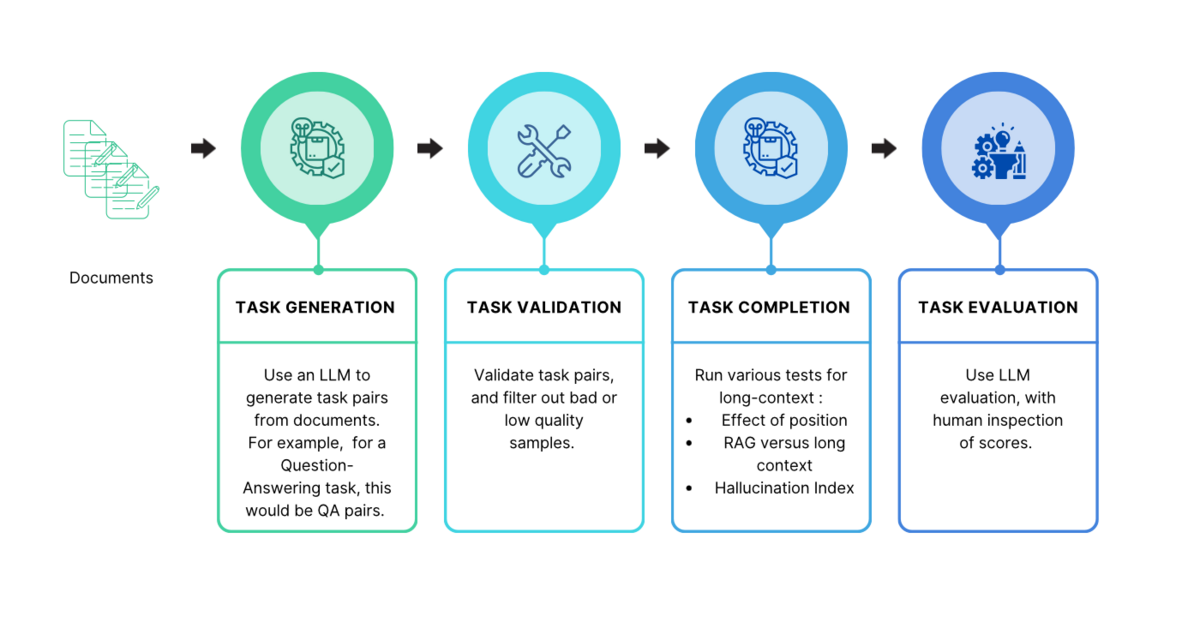
Snorkel researchers devised a new way to evaluate long context models and address their “lost-in-the-middle” challenges with mediod voting.
The Snorkel AI team will present 18 research papers and talks at the 2023 Neural Information Processing Systems (NeurIPS) conference from December 10-16. The Snorkel papers cover a broad range of topics including fairness, semi-supervised learning, large language models (LLMs), and domain-specific models. Snorkel AI is proud of its roots in the research community and endeavors to remain at the forefront…
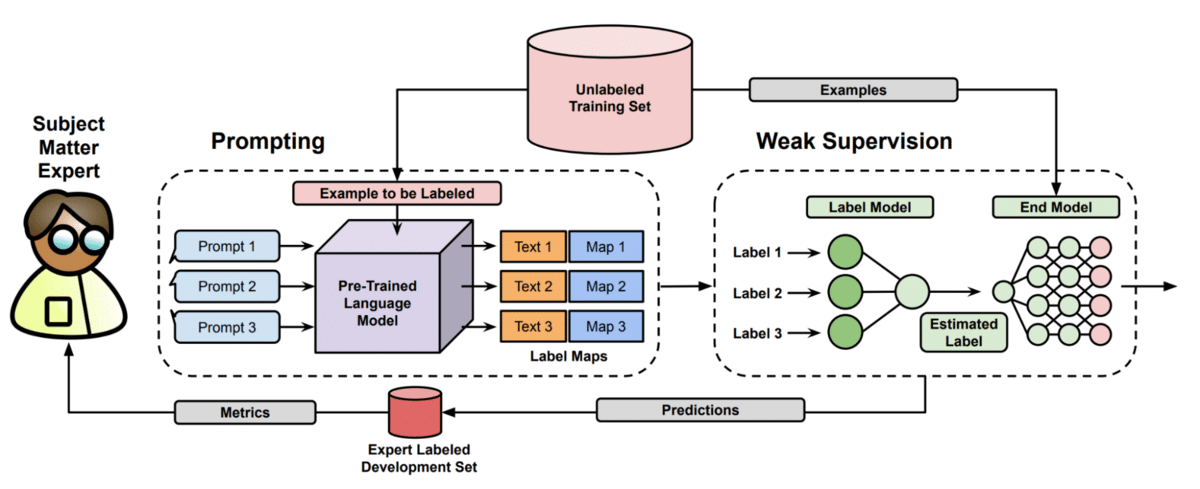
Getting better performance from foundation models (with less data)
Since launching the Open Benchmarks Grants, we’ve received more than 100 applications from academic groups and industry labs spanning a wide range of domains and capabilities. As the best benchmarks drive how the field allocates research effort, the bar for benchmarks has risen as well. Here, we share what’s now table stakes for useful benchmarks, and what separates the ones…
To kick off our inaugural Benchtalks, a series dedicated to the researchers building these measurement toolkits, Snorkel AI co-founder Vincent Sunn Chen sat down with Alex Shaw, Founding MTS at Laude Institute and co-creator of Terminal-Bench and Harbor. Highlights More on Terminal-Bench: See the leaderboard and the catalog of tasks at tbench.ai. Explore Harbor: Learn how to scale your agent…
TL;DR: We built FinQA — a financial question-answering environment with 290 expert-curated questions across 22 public companies, now available on OpenEnv. Agents use MCP tools to discover schemas, write constrained SQL queries, and answer multi-step questions from real SEC 10-K filings. Most open-source models struggle with this kind of multi-step tool use, and even frontier closed-source models, while more accurate,…

Since launching the Open Benchmarks Grants, we’ve received more than 100 applications from academic groups and industry labs spanning a wide range of domains and capabilities. As the best benchmarks drive how the field allocates research effort, the bar for benchmarks has risen as well. Here, we share what’s now table stakes for useful benchmarks, and what separates the ones…


To kick off our inaugural Benchtalks, a series dedicated to the researchers building these measurement toolkits, Snorkel AI co-founder Vincent Sunn Chen sat down with Alex Shaw, Founding MTS at Laude Institute and co-creator of Terminal-Bench and Harbor. Highlights More on Terminal-Bench: See the leaderboard and the catalog of tasks at tbench.ai. Explore Harbor: Learn how to scale your agent…

TL;DR: We built FinQA — a financial question-answering environment with 290 expert-curated questions across 22 public companies, now available on OpenEnv. Agents use MCP tools to discover schemas, write constrained SQL queries, and answer multi-step questions from real SEC 10-K filings. Most open-source models struggle with this kind of multi-step tool use, and even frontier closed-source models, while more accurate,…


The Snorkel research team collaborated with the rLLM team at UC Berkeley on the Agentica project, using their open-source rLLM framework to fine-tune Qwen3-4B-Instruct-2507, delivering a model that beats Qwen3-235B-A22B on Snorkel AI’s expert-curated financial benchmarks – at 1/60th the size. A full breakdown of the results are published in the rLLM blog here. The key insight? Just focus on…


Error analysis of 8 models on Agentic Coding tasks Successful completion of complex tasks doesn’t come from models being always right. It comes from models being resilient when things go wrong. To get a deeper understanding of model behavior in agentic environments, our team analyzed all of the errors found in the full traces of tasks from our Agentic Coding…


Today, AI is marked by a growing asymmetry: the excitement around agentic AI is real — backed by quantitative progress on model cards and genuine leaps forward, especially in coding. But ask individuals or enterprises where they feel ready to deploy agentic automation in high-stakes, domain-specific settings outside of coding… and you will find hesitation. The reason: our ability to…

SlopCodeBench reveals how AI coding agents degrade code quality over time—measuring “slop,” technical debt, and architectural erosion across iterations.


Today, we’re sharing details about the Snorkel Agentic Coding benchmark—a comprehensive evaluation suite designed to test whether agents can handle the full complexity of software engineering work.

We just returned from NeurIPS 2025, and we’re still processing everything we saw. The energy around data-centric AI has never been stronger—and we couldn’t be more grateful to the research community for pushing these ideas forward.


Explores how rubrics support agentic, multi-turn, tool-using, multimodal, and code-generating AI systems, and how they evolve with AI feedback and ensemble evaluation.


TL;DR: We stress-tested the “generate → criticize → improve” loop on 50 visual reasoning tasks. The results were counterintuitive: self-critique acts as a corrosive agent on high-performance tasks, turning 98% accuracy into 57%. Yet, for tasks where models fail completely, it works like magic. This difficulty-dependent behavior poses a critical, hidden risk for RLFT pipelines. The promise vs. the reality…


Snorkel Chief Scientist Fred Sala and Kobie Crawford chat with the Terminal-Bench team to unpack the design behind Terminal-Bench 2.0 and the new Harbor framework.


Snorkel AI contributes specialized datasets to Hazy Research’s “Intelligence-per-Watt” study, advancing how efficiently AI turns energy into intelligence.

Terminal-Bench 2.0 launches today, marking a major leap in AI agent evaluation. Snorkel AI contributed key research and task design to this release.

We unpack what makes a high-quality RL environment for LLMs and show how we build realistic, enterprise-grade environments at Snorkel AI.
