

author
Research Fellow & Founding Team
,
Snorkel AI
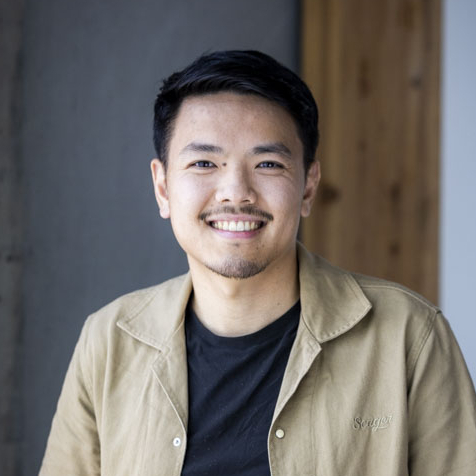
Vincent Sunn Chen is a Research Fellow on the founding team at Snorkel AI. His work centers on systems for high quality AI evaluation & data development with experts in the loop. He currently leads the Open Benchmarks Grants, a $3M commitment to funding benchmarks and infrastructure for frontier agents. Prior to Snorkel, Vincent was a researcher at the Stanford AI Lab, where he studied the foundations of data-centric AI systems.
The latest from Vincent
Can Agents Design Libraries for Agents?
Agents increasingly build on code written by other agents, and they reimplement rather than reuse, growing the codebases later agents must work in. To measure how well agents design libraries for other agents, we introduce LibraryDesignBench, a two-phase benchmark in which an agent implements a full-featured library from a specification that defines required capabilities and potential use cases without prescribing the design. We evaluate the library through the correctness and simplicity of programs written by three user agents from different model families. The benchmark spans 242 expert-validated programming problems across 15 library-design tasks in four languages. On eleven of the...
Research Paper
NEW
Can Agents Design Libraries for Agents?
Agents increasingly build on code written by other agents, and they reimplement rather than reuse, growing the codebases later agents must work in. To measure how well agents design libraries for other agents, we introduce LibraryDesignBench, a two-phase benchmark in which an agent implements a full-featured library from a specification that defines required capabilities and potential use cases without prescribing…

OSWorld 2.0: Benchmarking Computer Use Agents on Long-Horizon Real-World Tasks
Existing computer-use benchmarks fail to capture the realism, complexity, and long-horizon demands of real-world computer use, limiting their ability to reveal the limita-tions of frontier agents. We introduce OSWORLD 2.0, a benchmark of 108 long-horizoncomputer-use workflows across everyday and professional tasks, designed to capturecomplex and challenging real-world phenomena. Each task represents a realistic end-to-end workflow that takes human users a median of about 1.6 hours to complete andrequires an average of 318 tool calls with Claude Opus 4.7 using maximum thinking,compared with about 30 in OSWORLD 1.0. OSWORLD 2.0 targets challenge phenomenathat are common in real workflows yet underrepresented in...
Research Paper
OSWorld 2.0: Benchmarking Computer Use Agents on Long-Horizon Real-World Tasks
Existing computer-use benchmarks fail to capture the realism, complexity, and long-horizon demands of real-world computer use, limiting their ability to reveal the limita-tions of frontier agents. We introduce OSWORLD 2.0, a benchmark of 108 long-horizoncomputer-use workflows across everyday and professional tasks, designed to capturecomplex and challenging real-world phenomena. Each task represents a realistic end-to-end workflow that takes human users a…

Blog
Benchtalks #3: We taught AI everything except how to learn
For our third Benchtalks, the series dedicated to the researchers building the measurement toolkits that frontier labs hill-climb on, Snorkel AI co-founder Vincent Sunn Chen sat down with Parth Asawa, a PhD student at UC Berkeley advised by Matei Zaharia and Joey Gonzalez. Parth leads research on continual learning and is the creator of Continual Learning Bench, developed in collaboration…
Agents’ Last Exam
Recent AI systems have achieved strong results on a wide range of benchmarks, yetthese gains have not translated into economically meaningful deployment acrossmany professional domains. We argue that this gap is largely an evaluation problem:widely used benchmarks lack sustained performance measurement on real andeconomically valuable workflows. This paper introduces Agents’ Last Exam(ALE), a benchmark designed to evaluate AI agents on long horizon, economicallyvaluable, real world tasks with verifiable outcomes. Developed in collaborationwith 250+ industry experts, ALE covers non-physical industries defined withreference to O*NET / SOC 2018 (the U.S. federal occupational taxonomy). It isorganized around a task taxonomy with 55 sub...
Research Paper
Accepted to NeurIPS 2026
Agents’ Last Exam
Recent AI systems have achieved strong results on a wide range of benchmarks, yetthese gains have not translated into economically meaningful deployment acrossmany professional domains. We argue that this gap is largely an evaluation problem:widely used benchmarks lack sustained performance measurement on real andeconomically valuable workflows. This paper introduces Agents’ Last Exam(ALE), a benchmark designed to evaluate AI agents on…
Continual Learning Bench: Evaluating Frontier AI Systems in Real-World Stateful Environments
Continual learning, the ability of AI systems to improve through sequential experience, has attracted substantial interest, but no high-quality benchmark exists to evaluate it. We introduce Continual Learning Bench (CL-Bench), the first difficult, expert-validated benchmark designed to measure whether LLM-based systems genuinely improve with experience. CL-Bench spans six diverse domains (software engineering, signal processing, disease outbreak forecasting, database querying, strategic game-playing, and demand forecasting), each validated by domain experts and designed so that tasks share a learnable latent structure (codebase layout, disease outbreak dynamics, opponent strategies) that a stateful system can discover online but a stateless one cannot. We evaluate...
Research Paper
Accepted to NeurIPS 2026
Continual Learning Bench: Evaluating Frontier AI Systems in Real-World Stateful Environments
Continual learning, the ability of AI systems to improve through sequential experience, has attracted substantial interest, but no high-quality benchmark exists to evaluate it. We introduce Continual Learning Bench (CL-Bench), the first difficult, expert-validated benchmark designed to measure whether LLM-based systems genuinely improve with experience. CL-Bench spans six diverse domains (software engineering, signal processing, disease outbreak forecasting, database querying, strategic…

Blog
Benchtalks #2: The future of coding benchmarks
For our second Benchtalks, the series dedicated to the researchers building the measurement toolkits that frontier labs hill-climb on, Snorkel AI co-founder Vincent Sunn Chen sat down with John Yang, a Stanford PhD student and creator of the SWE-bench franchise, SWE-smith, CodeClash, and most recently ProgramBench. Highlights More on ProgramBench: See the benchmark and the upcoming leaderboard at programbench.com. More from John Yang: Publications and writing at john-b-yang.github.io. Snorkel…

Blog
Benchmarks should shape the frontier, not just measure it
Since launching the Open Benchmarks Grants, we’ve received more than 100 applications from academic groups and industry labs spanning a wide range of domains and capabilities. As the best benchmarks drive how the field allocates research effort, the bar for benchmarks has risen as well. Here, we share what’s now table stakes for useful benchmarks, and what separates the ones…

Blog
Benchtalks #1: Alex Shaw (Terminal-Bench, Harbor) – Building the Benchmark Factory
To kick off our inaugural Benchtalks, a series dedicated to the researchers building these measurement toolkits, Snorkel AI co-founder Vincent Sunn Chen sat down with Alex Shaw, Founding MTS at Laude Institute and co-creator of Terminal-Bench and Harbor. Highlights More on Terminal-Bench: See the leaderboard and the catalog of tasks at tbench.ai. Explore Harbor: Learn how to scale your agent…

Blog
Closing the Evaluation Gap in Agentic AI
Today, AI is marked by a growing asymmetry: the excitement around agentic AI is real — backed by quantitative progress on model cards and genuine leaps forward, especially in coding. But ask individuals or enterprises where they feel ready to deploy agentic automation in high-stakes, domain-specific settings outside of coding… and you will find hesitation. The reason: our ability to…

