

We develop methods, benchmarks, and training systems that turn expert data into frontier AI
building benchmarks and collaborating with


Featured research

Senior SWE-bench built by Snorkel with Princeton University and UW-Madison

Continual Learning Bench: Evaluating agents that adapt and improve over time

Learning from Less: Measuring the Effectiveness of RLVR in Low Data Compute Regimes

Agents' Last Exam: Challenge and measure AI agents on economically valuable and real-world tasks

SlopCodeBench: A community benchmark measuring code erosion

Harvey’s BigLaw Bench: Research

Terminal-Bench 2.0: Raising the bar for AI agent evaluation

Benchmarking Agents in Insurance Underwriting Environments

Agentic Coding benchmark: Evaluating AI Models on complex, real-world coding tasks
Vision and impact
We help labs advance frontier models by working with domain experts to design and build complex, realistic datasets that drive model performance.

Benchmarking & Evaluation
Build benchmarks that define and advance the AI frontier

Scaling Subject Matter Expertise
Define how subject matter experts encode their knowledge into data

RL, Training, & Data Valuation
Drive dataset development based on feedback from RL and model training
Community and open science
Open benchmarks, conversations, and research for real-world AI performance.

Open Benchmarks Grants
Backed by a $30M commitment, Open Benchmarks Grants funds new benchmarks, red-teams existing ones to find weaknesses, and supports researchers through a fellowship.

Benchtalks

Reading Group
DEEP RESEARCH Expertise
Technical advisors and distinguished affiliates


Browse research blogs and academic papers

Snorkel researchers devised a new way to evaluate long context models and address their “lost-in-the-middle” challenges with mediod voting.
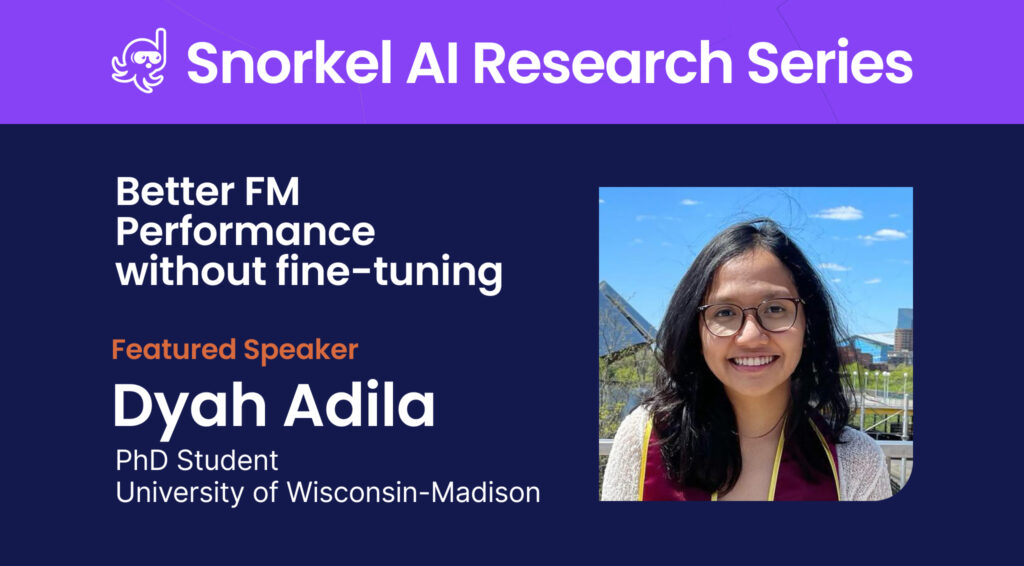
ROBOSHOT acts like a lens on foundation models and improves their zero-shot performance without additional fine-tuning.

Microsoft infrastructure facilitates Snorkel AI research experiments, including our recent high rank on the AlpacaEval 2.0 LLM leaderboard.

Humans learn tasks better when taught in a logical order. So do LLMs. Researchers developed a way to exploit this tendency called “Skill-it!”

Training large language models is a multi-layered stack of processes, each with its unique role and contribution to the model’s performance.

Low-rank adaptation (LoRA) lets data scientists customize GenAI models like LLMs faster than traditional full fine-tuning methods.
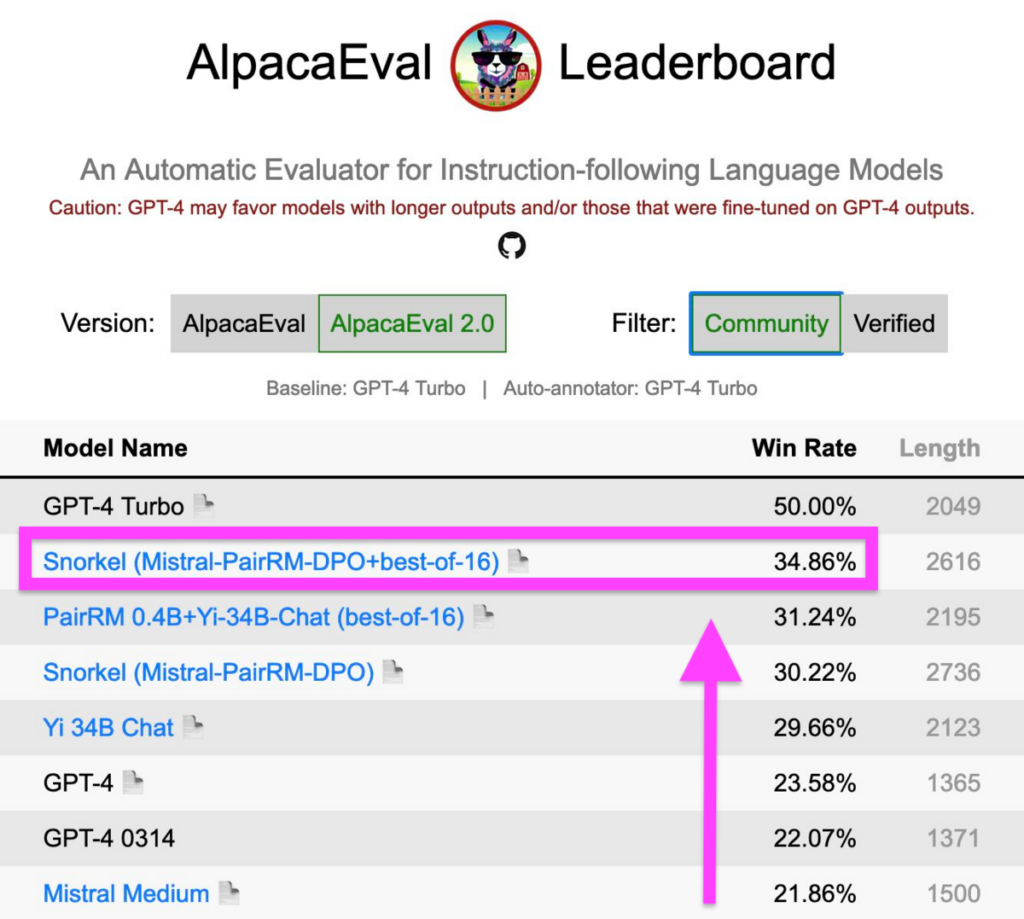
Snorkel researchers’ state-of-the-art methods created a 7B LLM that ranked 2nd, behind only GPT-4 Turbo, on AlpacaEval 2.0 leaderboard.
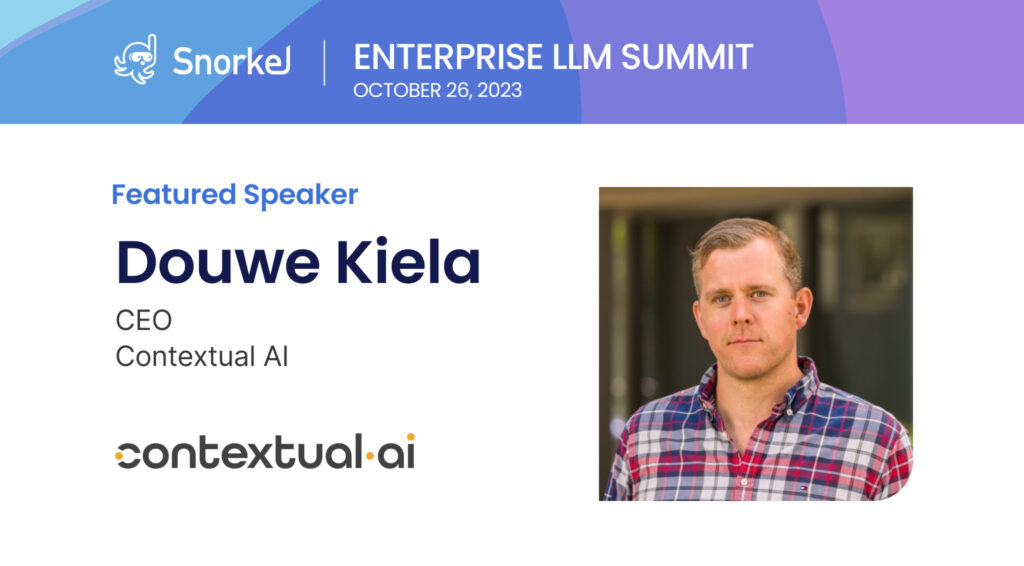
Snorkel CEO Alex Ratner spoke with Douwe Keila, an author of the original paper about retrieval augmented generation (RAG).

Labeling training data is a critical and expensive step in producing high accuracy ML models, whether training from scratch or fine-tuning. To make labeling more efficient, two major approaches are programmatic weak supervision (WS) and semi-supervised learning (SSL). More recent works have either explicitly or implicitly used techniques at their intersection, but in various complex and ad hoc ways. In…
October 8, 2026 | San francisco


A one-day, invite-only summit providing a first look at the benchmarks and research that will shape the frontier.

