

author
PhD Student
,
University of Wisconsin-Madison
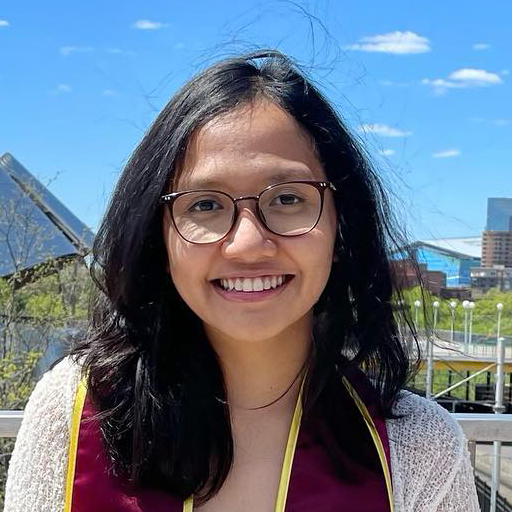
Dyah Adila hails from Indonesia and studies under Fred Sala. She had interned at Amazon AWS AI and JP Morgan Chase, Singapore. Her research interests center on building robust and reliable machine learning solutions— especially in settings where access to labeled data is limited.
The latest from Dyah

Blog
How ROBOSHOT boosts zero-shot foundation model performance
ROBOSHOT acts like a lens on foundation models and improves their zero-shot performance without additional fine-tuning.

Zero-Shot Robustification of Zero-Shot Models with Foundation Models
Zero-shot inference is a powerful paradigm that enables the use of large pretrained models for downstream classification tasks without further training. However, these models are vulnerable to inherited biases that can impact their performance. The traditional solution is fine-tuning, but this undermines the key advantage of pretrained models, which is their ability to be used out-of-the-box. We propose ROBOSHOT, a method that improves the robustness of pretrained model embeddings in a fully zero-shot fashion. First, we use zero-shot language models (LMs) to obtain useful insights from task descriptions. These insights are embedded and used to remove harmful and boost useful...
Research Paper
Zero-Shot Robustification of Zero-Shot Models with Foundation Models
Zero-shot inference is a powerful paradigm that enables the use of large pretrained models for downstream classification tasks without further training. However, these models are vulnerable to inherited biases that can impact their performance. The traditional solution is fine-tuning, but this undermines the key advantage of pretrained models, which is their ability to be used out-of-the-box. We propose ROBOSHOT, a…

Geometry Aware Adaptation for Pretrained Models
Machine learning models—including prominent zero-shot models—are often trained on datasets whose labels are only a small proportion of a larger label space. Such spaces are commonly equipped with a metric that relates the labels via distances between them. We propose a simple approach to exploit this information to adapt the trained model to reliably predict new classes—or, in the case of zero-shot prediction, to improve its performance—without any additional training. Our technique is a drop-in replacement of the standard prediction rule, swapping arg max with the Fréchet mean. We provide a comprehensive theoretical analysis for this approach, studying (i) learning-theoretic...
Research Paper
Geometry Aware Adaptation for Pretrained Models
Machine learning models—including prominent zero-shot models—are often trained on datasets whose labels are only a small proportion of a larger label space. Such spaces are commonly equipped with a metric that relates the labels via distances between them. We propose a simple approach to exploit this information to adapt the trained model to reliably predict new classes—or, in the case…
Mitigating Source Bias for Fairer Weak Supervision
Weak supervision overcomes the label bottleneck, enabling efficient development of training sets. Millions of models trained on such datasets have been deployed in the real world and interact with users on a daily basis. However, the techniques that make weak supervision attractive—such as integrating any source of signal to estimate unknown labels—also ensure that the pseudolabels it produces are highly biased. Surprisingly, given everyday use and the potential for increased bias, weak supervision has not been studied from the point of view of fairness. This work begins such a study. Our departure point is the observation that even when a...
Research Paper
Mitigating Source Bias for Fairer Weak Supervision
Weak supervision overcomes the label bottleneck, enabling efficient development of training sets. Millions of models trained on such datasets have been deployed in the real world and interact with users on a daily basis. However, the techniques that make weak supervision attractive—such as integrating any source of signal to estimate unknown labels—also ensure that the pseudolabels it produces are highly…

Causal Omnivore: Fusing Noisy Estimates of Spurious Correlations
Spurious correlations are one of the biggest pain points for users of modern machine learning. To handle this issue, many approaches attempt to learn features that are causally linked to the prediction variable. Such techniques, however, suffer from various flaws—they are often prohibitively complex or based on heuristics and strong assumptions that may fail in practice. There is no onesize-fits-all causal feature identification approach. To address this challenge, we propose a simple way to fuse multiple noisy estimates of causal features. Our approach treats the underlying causal structure as a latent variable and exploits recent developments in estimating latent structures...
Research Paper
Causal Omnivore: Fusing Noisy Estimates of Spurious Correlations
Spurious correlations are one of the biggest pain points for users of modern machine learning. To handle this issue, many approaches attempt to learn features that are causally linked to the prediction variable. Such techniques, however, suffer from various flaws—they are often prohibitively complex or based on heuristics and strong assumptions that may fail in practice. There is no onesize-fits-all…

AutoWS-Bench-101: Benchmarking Automated Weak Supervision with 100 Labels
AutoWS-Bench-101 is a framework for evaluating automated weak supervision techniques compared to other baseline methods such as zero-shot foundation models and supervised learning, in order to help practitioners choose the best method to generate additional labels.
Research Paper
AutoWS-Bench-101: Benchmarking Automated Weak Supervision with 100 Labels
AutoWS-Bench-101 is a framework for evaluating automated weak supervision techniques compared to other baseline methods such as zero-shot foundation models and supervised learning, in order to help practitioners choose the best method to generate additional labels.

