




Latest features and platform improvements for Snorkel Flow 2022 is off to a strong start as we continue to make the benefits of data-centric AI more accessible to the enterprise. With this release, we’re further empowering AI/ML teams to drive rapid, analysis-driven training data iteration and development. Improvements include streamlined data exploration and programmatic labeling workflows, integrated active learning and AutoML,…
The adoption of trustworthy AI and its successful integration into our country’s most critical systems is paramount to achieving the goal of employing AI applications to accelerate economic prosperity and national security. However, traditional approaches to developing AI applications suffer from a critical flaw that leads to significant ethics and governance concerns. Specifically, AI today relies on massive, hand-labeled training datasets…

ML models will always have some level of bias. Rather than relying on black-box algorithms, how can we make the entire AI development workflow more auditable? How do we build applications where bias can be easily detected and quickly managed? Today, most organizations focus their model governance efforts on investigating model performance and the bias within the predictions. Data science…

The Future of Data-Centric AI Talk Series Background Chelsea Finn is an assistant professor of computer science and electrical engineering at Stanford University, whose research has been widely recognized, including in the New York Times and MIT Technology Review. In this talk, Chelsea talks about algorithms that use data from tasks you are interested in and data from other tasks….

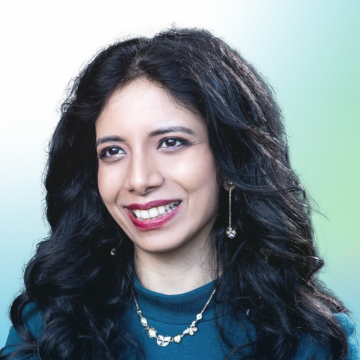
The future of data-centric AI talk series Background Anima Anandkumar holds dual positions in academia and industry. She is a Bren professor at Caltech and the director of machine learning research at NVIDIA. Anima also has a long list of accomplishments ranging from the Alfred P. Sloan scholarship to the prestigious NSF career award and many more. She recently joined…

Understanding the label model. Machine learning whiteboard (MLW) open-source series Background Frederic Sala, is an assistant professor at the University of Wisconsin-Madison, and a research scientist at Snorkel AI. Previously, he was a postdoc in Chris Re’s lab at Stanford. His research focuses on data-driven systems and weak supervision. In this talk, Fred focuses on weak supervision modeling. This machine…

The future of data-centric AI talk series Background An AI system consists of two parts: the model— algorithm or some code—and data. The dominant paradigm in machine-learning researchers has been for most data scientists, including myself, to download a fixed dataset and iterate on the model. That this has become conventional is a tribute to how successful this model-centric approach…
Using a data-centric approach to capture the best of rule-based systems and ML models for enterprise AI One of the biggest challenges to making AI practical for the enterprise is keeping the AI application relevant (and therefore valuable) in the face of ever-changing input data and evolving business objectives. Practitioners typically use one of two approaches to build these AI applications:…

