

We develop methods, benchmarks, and training systems that turn expert data into frontier AI
building benchmarks and collaborating with


Featured research

Senior SWE-bench built by Snorkel with Princeton University and UW-Madison

Continual Learning Bench: Evaluating agents that adapt and improve over time

Learning from Less: Measuring the Effectiveness of RLVR in Low Data Compute Regimes

Agents' Last Exam: Challenge and measure AI agents on economically valuable and real-world tasks

SlopCodeBench: A community benchmark measuring code erosion

Harvey’s BigLaw Bench: Research

Terminal-Bench 2.0: Raising the bar for AI agent evaluation

Benchmarking Agents in Insurance Underwriting Environments

Agentic Coding benchmark: Evaluating AI Models on complex, real-world coding tasks
Vision and impact
We help labs advance frontier models by working with domain experts to design and build complex, realistic datasets that drive model performance.

Benchmarking & Evaluation
Build benchmarks that define and advance the AI frontier

Scaling Subject Matter Expertise
Define how subject matter experts encode their knowledge into data

RL, Training, & Data Valuation
Drive dataset development based on feedback from RL and model training
Community and open science
Open benchmarks, conversations, and research for real-world AI performance.

Open Benchmarks Grants
Backed by a $30M commitment, Open Benchmarks Grants funds new benchmarks, red-teams existing ones to find weaknesses, and supports researchers through a fellowship.

Benchtalks

Reading Group
DEEP RESEARCH Expertise
Technical advisors and distinguished affiliates


Browse research blogs and academic papers
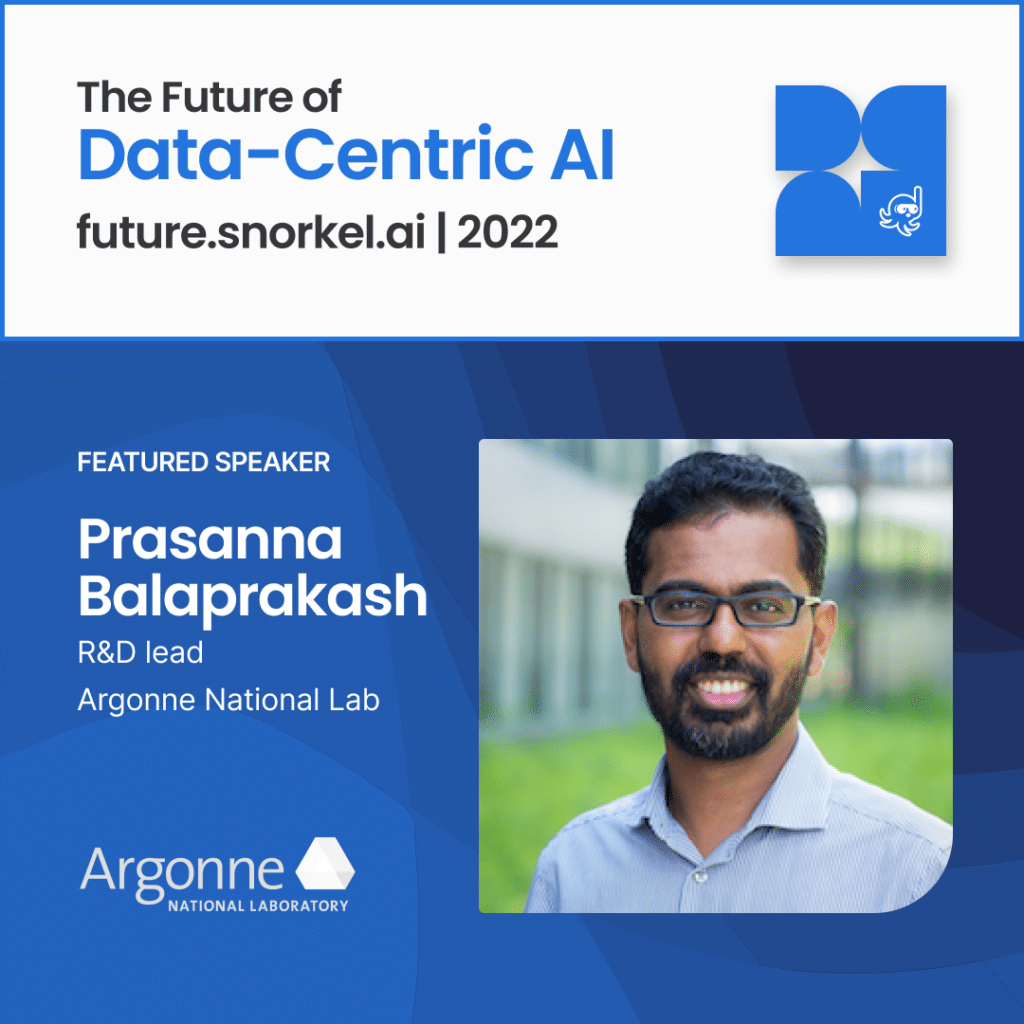
Prasanna Balaprakash, research and development lead from Argonne National Laboratory gave a presentation entitled “Extracting the Impact of Climate Change from Scientific Literature using Snorkel-Enabled NLP” at Snorkel AI’s Future of Data-Centric AI Workshop in August, 2022.
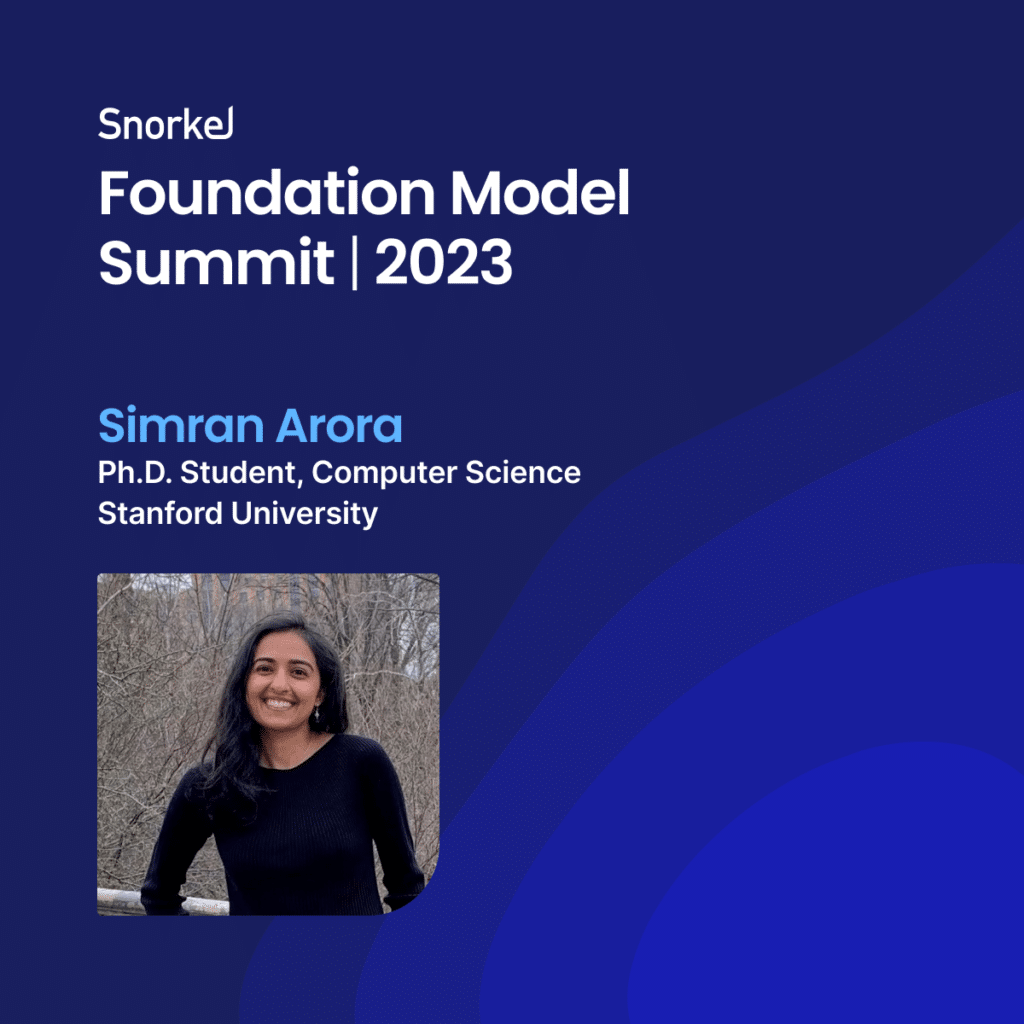
Simran Arora is a machine learning researcher at Stanford University. She presented “Ask Me Anything: How are Foundation Models Changing the Way We Build Software” at Snorkel AI’s Foundation Model Virtual Summit 2023.
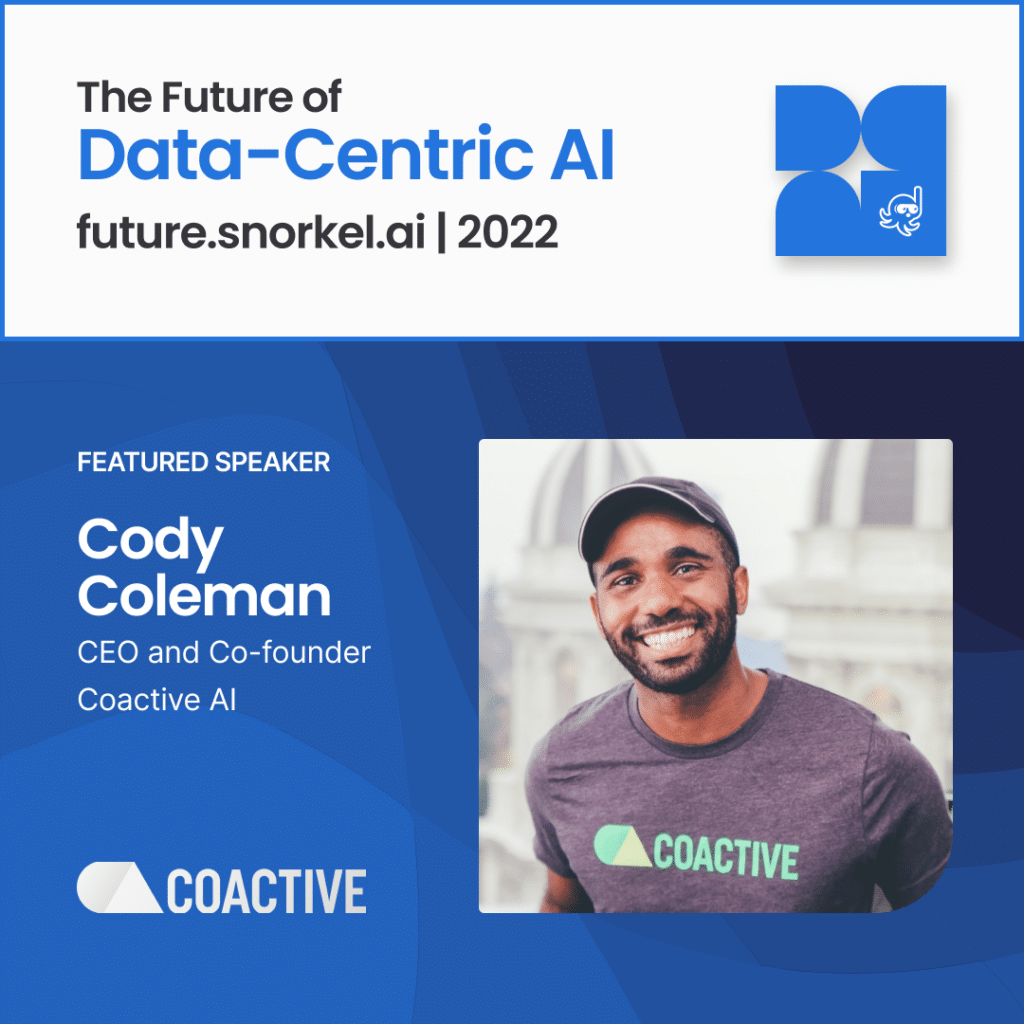
Cody Coleman, CEO and Co-Founder of Coactive AI gave a presentation entitled “Data Selection for Data-Centric AI: Quality over Quantity” at Snorkel AI’s Future of Data-Centric AI Event in August 2022.
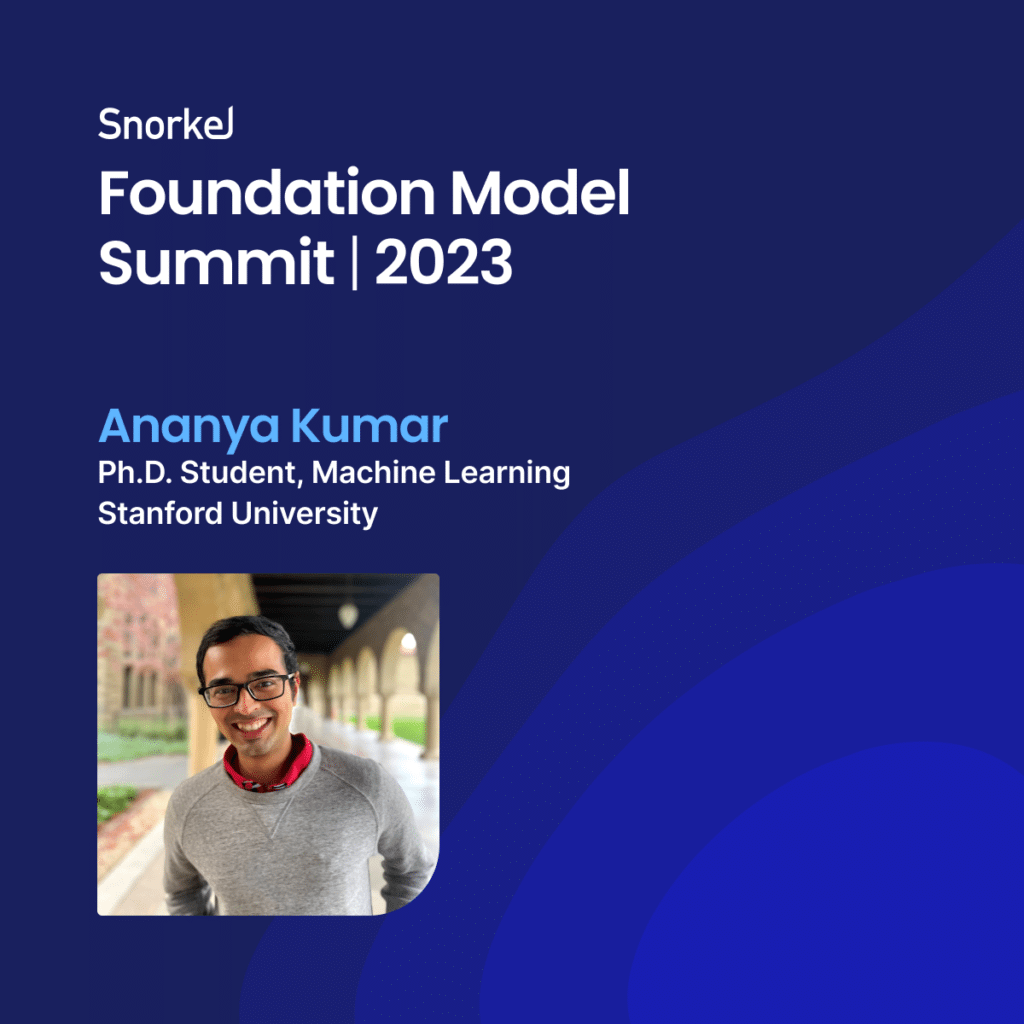
Ananya Kumar, Stanford Ph.D. student, explains methods to improve foundation model performance, including linear probing and fine-tuning.

Snorkel AI researchers continue to push the frontier of machine learning, as demonstrated by the 18 research papers recently added to our website.

Snorkel AI CEO and co-founder Alex Ratner recently spoke with five Snorkel researchers about their foundation model research.

This paper proposes generalizations of CWOLA and SALAD, which exploit multiple reference datasets to improve performance in resonant anomaly detection, and provides finite-sample guarantees to go beyond existing asymptotic analyses.

Stanford researchers concluded that new, larger and more powerful foundation models represent a paradigm shift in AI, providing opportunities and risks that require deep interdisciplinary collaboration to understand and address.

This paper proposes “Ask Me Anything” (AMA), a prompting method that uses weak supervision to combine noisy predictions from multiple prompts generated from an LLM, resulting in an average 10.2% performance lift over the few-shot baseline across a variety of different open-source models.

