




30+ sessions by 40+ speakers in 2 action-packed days Last year we organized The Future of Data-Centric AI conference to explore the shift from model-centric to data-centric AI. Speakers included researchers and industry experts such as Andrew Ng (Landing AI), Anima Anandkumar (NVIDIA), Chris Re (Stanford AI Lab), Michael DAndrea (Genentech), Skip McCormick (BNY Mellon), Imen Grida Ben Yahia (Orange)…

Constructing labeling functions (LFs) is at the heart of using weak supervision. We often think of these labeling functions as programmatic expressions of domain expertise or heuristics. Indeed, much of the advantage of weak supervision is that we can save time—writing labeling functions and applying them to data at scale is much more efficient compared to hand-labeling huge numbers of…

Powerful resources to leverage as labeling functions In this post, we’ll use the COVID-FACT dataset to demonstrate how to use existing resources as labeling functions (LFs), to build a fact-checking system. The COVID-FACT dataset contains 4086 claims about the COVID-19 pandemic; it contains claims, evidence for the claims, and contradictory claims refuted by the evidence. The evidence retrieval is formulated…

Browse through these FAQ to find answers to commonly raised questions about Snorkel AI, Snorkel Flow, and data-centric AI development. Have more questions? Contact us. Programmatic labeling Use cases 1. What is a labeling function? A Labeling Function (LF) is an arbitrary function that takes in a data point and outputs a proposed label or abstains. The logic used to…

This post showcases a panel discussion on the academic and industry perspectives of ethical AI, which was moderated by Director of Federal Strategy and Growth, Alexis Zumwalt, Fouts Family Early Career Professor and Lead of Ethical AI (NSF AI Institute AI4OPT), Georgia Institute of Technology, Swati Gupta, Chief Data Officer, Department of the Navy, Thomas Sasalsa, Senior Manager of Responsible…

We’re currently experiencing such a rapid AI revolution and adoption of technologies, ranging from autonomous cars to virtual assistants and robotic surgeries and so much more, making it challenging for our government agencies to keep up. Especially when adding AI technologies to the mix, it can be even harder to manage.The crucial adoption of trustworthy AI and its successful integration…
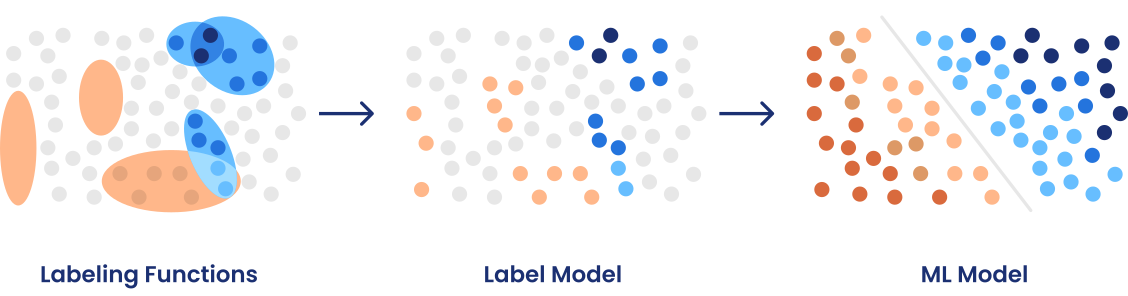
The founding team of Snorkel AI has spent over half a decade—first at the Stanford AI Lab and now at Snorkel AI—researching programmatic labeling and other techniques for breaking through the biggest bottleneck in AI: the lack of labeled training data. This research has resulted in the Snorkel research project and 150+ peer-reviewed publications. Snorkel’s programmatic labeling technology has been…
The founding team of Snorkel AI has spent over half a decade—first at the Stanford AI Lab and now at Snorkel AI—researching weak supervision (WS) and other techniques for breaking through the biggest bottleneck in AI: the lack of labeled training data. This research has resulted in the Snorkel research project and 150+ peer-reviewed publications. Snorkel’s technology which applies weak…
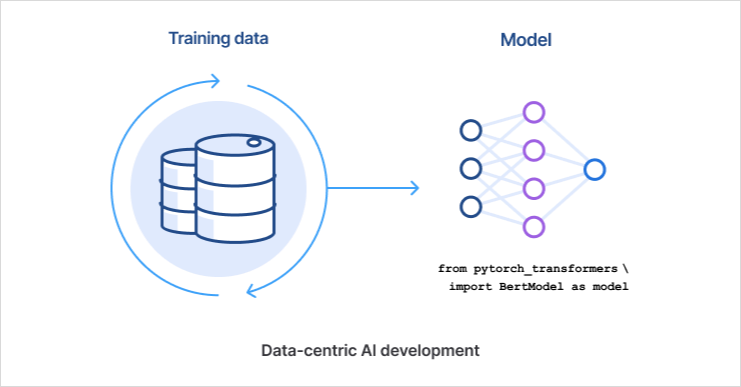
The founding team of Snorkel AI has spent over half a decade—first at the Stanford AI Lab and now at Snorkel AI—researching data-centric techniques to overcome the biggest bottleneck in AI: The lack of labeled training data. In this video Snorkel AI co-founder Paroma Varma gives an overview of the key principles of data-centric AI development. What is data-centric AI?…

