Tag

Evaluation

AI evaluation systematically measures a model’s performance on tasks. Classically, this applied metrics like accuracy or precision to clear and discrete numerical or categorical targets. Moden evaluation also assesses the output of generative models to ensure they create content within an organization’s standards and guidelines.
All articles on Evaluation

Image
Snorkel AI Team presents research at NeurIPS 2022
The Snorkel AI team will present five research papers advancing weak supervision and programmatic labeling at the NeurIPS 2022 conference that started this week.
November 29, 2022
Team Snorkel
Image
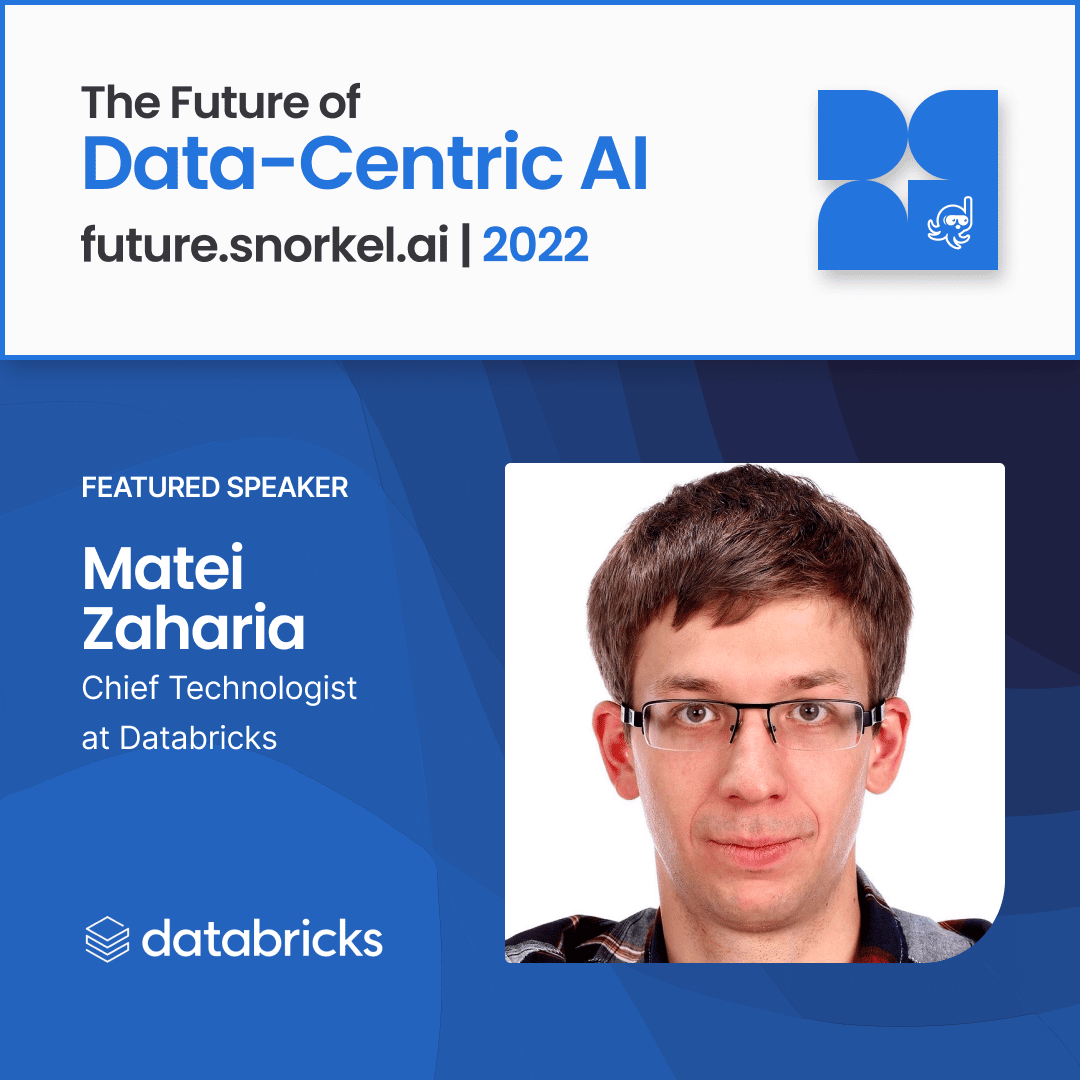
What can Data-Centric AI learn from data & ML engineering?
Databricks’ Chief Technologist: Data-Centric AI can learn from Data Engineering and ML Engineering in five ways: continuous updates, versioning, code-centric deployment, data privatization and actionable monitoring.
November 5, 2022
Team Snorkel
Image
Building an NLP application to analyze ESG factors in Earnings Calls using Snorkel Flow
Create a data-centric AI application using Snorkel Flow to save your analysts time of manual labeling and information extraction related to environmental, social, and governance (ESG) factors from earnings call transcripts. Rapidly and accurately extract all existing and new factors from the transcripts to make the right investment decision.
November 3, 2022
Amir Imani
Image
Building Trustworthy AI applications with data-centric AI
AI is generally accepted as necessary for organizations across private and public sectors to build (or maintain) a competitive advantage. However, a major challenge to adopting AI successfully is our ability to build reliable, predictable, and equitable solutions. A critical flaw with traditional approaches to developing AI is the reliance on hand-labeled training datasets and/or “pre-trained” black-box models that are effectively ungovernable and unauditable. In this article, we explore the motivations and challenges for Trustworthy AI that we’ve encountered and discuss how core tenants of Data-Centric AI, including programmatic labeling, help ameliorate them.
October 4, 2022
Arjun Prakash
Image
Improving upon Precision, Recall, and F1 with Gain metrics
This blog post introduces variants of Precision, Recall, and F1 metrics called Precision Gain, Recall Gain, and F1 Gain. The gain variants have desirable properties such as meaningful linear interpolation of PR curves and a universal baseline across tasks. This post explains what these benefits mean for you, how the gain metrics are calculated and outline some examples for intuitive comparison. 
September 8, 2022
Bradley Fowler
Image
Summer 2022 Snorkel Flow release roundup
On the heels of the second annual Future of Data-Centric AI event, we’re energized by what we learned from data scientists, machine learning engineers, and AI leaders who are adopting data-centric approaches to accelerate AI success. The Snorkel Flow platform provides these teams with a seamless workflow across training data creation, model training, and analysis—the scaffolding to make data-centric AI
August 30, 2022
Molly Friederich
Image
Clinical entity classification in electronic health records
Research recap: Ontology-driven weak supervision for clinical entity classification in electronic health records (EHRs)  In this post, I have summarized the research published in this academic paper, Ontology-driven weak supervision for clinical entity classification in electronic health records by Jason Fries et al. This paper was published in Nature Communications in 2021.Problem statement Electronic health records (EHR) contain a rich
June 17, 2022
Nazanin Makkinejad
Image
Building AI models for financial document processing best practices
Highlighting the best practices for building and deploying AI models for financial document processing applications AI has massive potential in the financial industry. Building AI models to automate information extraction, fraud detection, and compliance monitoring can provide efficient and faster responses and support repurposing domain experts’ labor to more meaningful tasks. Developing AI models is not just about having models
June 15, 2022
Hoang Tran
Trustworthy AI, image by Tara Winstead
The benefits of programmatic labeling for trustworthy AI
The following post is based on a talk discussing the benefits of programmatic labeling for trustworthy AI, which was presented as part of the Trustworthy AI: A Practical Roadmap for Government event that took place this past April, with Snorkel AI Co-founder and Head of Technology, Braden Hancock. If you would like to watch Braden’s presentation, we have included it
June 9, 2022
Team Snorkel
Sharon Li portrayed
Uncovering the unknowns of deep neural networks by Sharon Li
Learning about the challenges and opportunities behind deep neural networks  In this talk, Assistant Professor in Computer Science Sharon Li shares some exciting work about uncovering the unknowns of deep neural networks. She also shares some exciting challenges and opportunities in this domain. If you would like to watch Sharon’s presentation, we have included it below, or you can find
June 8, 2022
Team Snorkel
James Zou portrayed
A data-centric perspective on trustworthy and interpretable AI
The future of data-centric AI talk series In this talk, Assistant Professor of Biomedical Data Science at Stanford University, James Zou, discusses the work he and his team have been doing from a data-centric perspective to trustworthy and interpretable AI. If you would like to watch James’ presentation, we have included it below, or you can find the entire event
June 6, 2022
Team Snorkel
Image
Government keynote presentation by FBI CTO Gregory Ihrie
Gregory Ihrie is the Chief Technology Officer for the FBI, responsible for technology, innovation, and strategy. He also leads the FBI’s efforts in advancing the bureau’s management, policy, and governance of AI systems. Ihrie chairs the FBI’s Scientific Working Group on Artificial Intelligence, as well as the Department of Justice’s AI Committee of Interest. He is one of three officers
June 4, 2022
Team Snorkel
Ce Zhang portrayed
MLOps: Towards DevOps for data-centric AI with Ce Zhang
The future of data-centric AI talk series  Don’t miss the opportunity to gain an in-depth understanding of data-centric AI and learn best practices from real-world implementations. Connect with fellow data scientists, machine learning engineers, and AI leaders from academia and industry with over 30 virtual sessions. Save your seat at The Future of Data-Centric AI. Happening on August 3-4, 2022.
June 2, 2022
Team Snorkel
Image
Panel discussion: Academic and industry perspectives on ethical AI
This post showcases a panel discussion on the academic and industry perspectives of ethical AI, which was moderated by Director of Federal Strategy and Growth, Alexis Zumwalt, Fouts Family Early Career Professor and Lead of Ethical AI (NSF AI Institute AI4OPT), Georgia Institute of Technology, Swati Gupta, Chief Data Officer, Department of the Navy, Thomas Sasalsa, Senior Manager of Responsible
May 24, 2022
Team Snorkel
Image
Event recap: Adopting trustworthy AI for government
We’re currently experiencing such a rapid AI revolution and adoption of technologies, ranging from autonomous cars to virtual assistants and robotic surgeries and so much more, making it challenging for our government agencies to keep up. Especially when adding AI technologies to the mix, it can be even harder to manage.The crucial adoption of trustworthy AI and its successful integration
May 23, 2022
Alexis Zumwalt
Liger: Fusing foundation model embeddings & weak supervision
Showcasing Liger—a combination of foundation model embeddings to improve weak supervision techniques. Machine learning whiteboard (MLW) open-source series In this talk, Mayee Chen, a PhD student in Computer Science at Stanford University focuses on her work combining weak supervision and foundation model embeddings that improve two essential aspects of current weak supervision techniques. Check out the full episode here or
May 9, 2022
Team Snorkel
AI in cybersecurity an introduction and case studies
An introduction to AI in cybersecurity with real-world case studies in a Fortune 500 organization and a government agency Despite all the recent advances in artificial intelligence and machine learning (AI/ML) applied to a vast array of application areas and use cases, success in AI in cybersecurity remains elusive. The key component to building AI/ML applications is training data, which
May 5, 2022
Nic Acton
Active learning: an overview
A primer on active learning presented by Josh McGrath. Machine learning whiteboard (MLW) open-source series This video defines active learning, explores variants and design decisions made within active learning pipelines, and compares it to related methods. It contains references to some seminal papers in machine learning that we find instructive. Check out the full video below or on Youtube. Additionally, a
May 4, 2022
Josh McGrath
Image
Bill of materials for responsible AI: collaborative labeling
In our previous posts, we discussed how explainable AI is crucial to ensure the transparency and auditability of your AI deployments and how trustworthy AI adoption and its successful integration into our country’s critical infrastructure and systems are paramount. In this post, we dive into making trustworthy and responsible AI possible with Snorkel Flow, the data-centric AI platform for government and federal agencies. Collaborative labeling and
April 28, 2022
Alexis Zumwalt
Image
ICLR 2022 recap from Snorkel AI
We are honored to be part of the International Conference on Learning Representations (ICLR) 2022, where Snorkel AI founders and researchers will be presenting five papers on data-centric AI topics The field of artificial intelligence moves fast!  This is a world we are intimately familiar with at Snorkel AI, having spun out of academia in 2019. For over half a
April 20, 2022
Braden Hancock
Image
Algorithms that leverage data from other tasks with Chelsea Finn
The Future of Data-Centric AI Talk Series Background Chelsea Finn is an assistant professor of computer science and electrical engineering at Stanford University, whose research has been widely recognized, including in the New York Times and MIT Technology Review. In this talk, Chelsea talks about algorithms that use data from tasks you are interested in and data from other tasks.
March 31, 2022
Team Snorkel
Image
Weak Supervision Modeling with Fred Sala
Understanding the label model. Machine learning whiteboard (MLW) open-source series Background Frederic Sala, is an assistant professor at the University of Wisconsin-Madison, and a research scientist at Snorkel AI. Previously, he was a postdoc in Chris Re’s lab at Stanford. His research focuses on data-driven systems and weak supervision. In this talk, Fred focuses on weak supervision modeling. This machine
March 17, 2022
Team Snorkel
Image
Tips for using a data-centric AI approach
The future of data-centric AI talk series Background An AI system consists of two parts: the model— algorithm or some code—and data. The dominant paradigm in machine-learning researchers has been for most data scientists, including myself, to download a fixed dataset and iterate on the model. That this has become conventional is a tribute to how successful this model-centric approach
March 9, 2022
Team Snorkel
How Genentech extracted information for clinical trial analytics with Snorkel Flow
Genentech, a global biotech leader and member of the Roche Group, leveraged Snorkel Flow to extract critical information from lengthy clinical trial protocol (CTP) pdf documents. They built AI applications that used NER, entity linking, text extraction, and classification models to determine inclusion/ exclusion criteria and to analyze Schedules of Assessments. Genentech’s team achieved 95-99% model accuracy by using Snorkel
February 26, 2022
Team Snorkel
Augmenting the clinical trial design process with information extraction
The future of data-centric AI talk series Background Michael DAndrea is the Principal Data Scientist at Genentech. He earned his MBA from Cornell University and a Master’s degree in Computing and Education from Columbia University. He currently works on using unstructured data sources for clinical trial analytics and his team is partnered with the Stanford “AI For Health” initiative as
February 22, 2022
Team Snorkel
Image
The Principles of Data-Centric AI Development
The Future of Data-Centric AI Talk Series Background Alex Ratner is CEO and co-founder of Snorkel AI and an Assistant Professor of Computer Science at the University of Washington. He recently joined the Future of Data-Centric AI event, where he presented the principles of data-centric AI and where it’s headed. If you would like to watch his presentation in full,
January 25, 2022
Team Snorkel
Building AI Applications Collaboratively Using Data-centric AI
The Future of Data-Centric AI Talk Series Background Roshni Malani received her PhD in Software Engineering from the University of California, San Diego, and has previously worked on Siri at Apple and as a founding engineer for Google Photos. She gave a presentation at the Future of Data-Centric AI virtual conference in September 2021. Her presentation is below, lightly edited
January 14, 2022
Team Snorkel
Artificial Intelligence (AI) Facts and Myths
ScienceTalks with Abigail See. Diving into the misconceptions of AI, the challenges of natural language generation (NLG), and the path to large-scale NLG deployment In this episode of Science Talks, Snorkel AI’s Braden Hancock chats with Abigail See, an expert natural language processing (NLP) researcher and educator from Stanford University. We discuss Abigail’s path into machine learning (ML), her previous
November 23, 2021
Team Snorkel
Design Principles for Iteratively Building AI Applications
Enabling iterative development workflows with Snorkel Flow’s Application Studio. Consider this scenario— we’re AI engineers, and we’re building a social media monitoring application to track the sentiment of Fortune 500 company mentions in the news.
November 8, 2021
Vincent Sunn Chen
Snorkel’s Journey to Data-Centric AI, with Chris Ré
The Future of Data-Centric AI Talk Series Background Snorkel co-founder Chris Ré is an associate professor of Computer Science at Stanford University and an award-winning researcher in data-based theory and machine learning. He has co-founded four companies based on his research in machine learning systems. Chris recently presented at the Future of Data-Centric AI virtual event in September, where he
November 3, 2021
Team Snorkel