


Main takeaways from The Future of Data-Centric AI Event
We recently hosted The Future of Data-Centric AI, where academia, research, and industry experts and practitioners came together to discuss the shift from model-centric AI development to data-centric AI and what lies ahead. This post gives you a quick overview of the event and top takeaways from over eight hours of insightful presentations. But first, I want to thank our presenters: Alex Ratner, Anima Anandkumar, Andrew Ng, Chris Re, Ce Zhang, Chelsea Finn, Darío García-García, Imen Grida Ben Yahia, James Zou, Justin Gottschlich, Michael DAndrea, Roshni Malani, Sharon Li, Skip McCormick, and Xu Chu. We also want to thank all the attendees who took part in the discussion and helped us make this community event a big success.Top Takeaways:
- Data-centric AI is being applied in real-world settings and yields results, as we saw in Imen and Michael, Justin, and Andrew’s presentations.
- There is significant research being carried out on Data-centric AI, some that you heard from James, Sharon, Ce, and Chelsea, and we have been doing as well with our research team.
- Data-centric AI, along with an SME collaboration and programmatic labeling, makes AI practical.
If you’d like to continue to get updated on what we are doing at Snorkel AI, our focus on data-centric AI, and to continue to explore the community-focused shift that data has to be a first-class core citizen for AI workflows, please consider signing up for the Snorkel AI community.Below is the complete event stream with link tags for each talk:
Stay in touch with Snorkel AI, follow us on Twitter, LinkedIn, Facebook, Youtube, or Instagram, and if you’re interested in joining the Snorkel team, we’re hiring! Please apply on our careers page.
Aarti Bagul
Head of ML Field Engineering
Aarti is the principal ML solutions engineer at Snorkel AI, where she leads a team of solutions engineers and collaborates with some of the company’s largest clients. Prior to joining Snorkel, she worked closely with Dr. Andrew Ng in various roles. She contributed to building ML companies from the ground up at AI Fund, both internally and through investments. She served as a machine learning engineer at his startup Landing AI, was the head TA for his deep learning class (CS230) at Stanford, and worked in his research lab at the university. Most recently, she played a key role in developing an updated version of Ng’s popular machine learning course, which has been taken by over 300,000 learners.
Recommended articles
View all articles
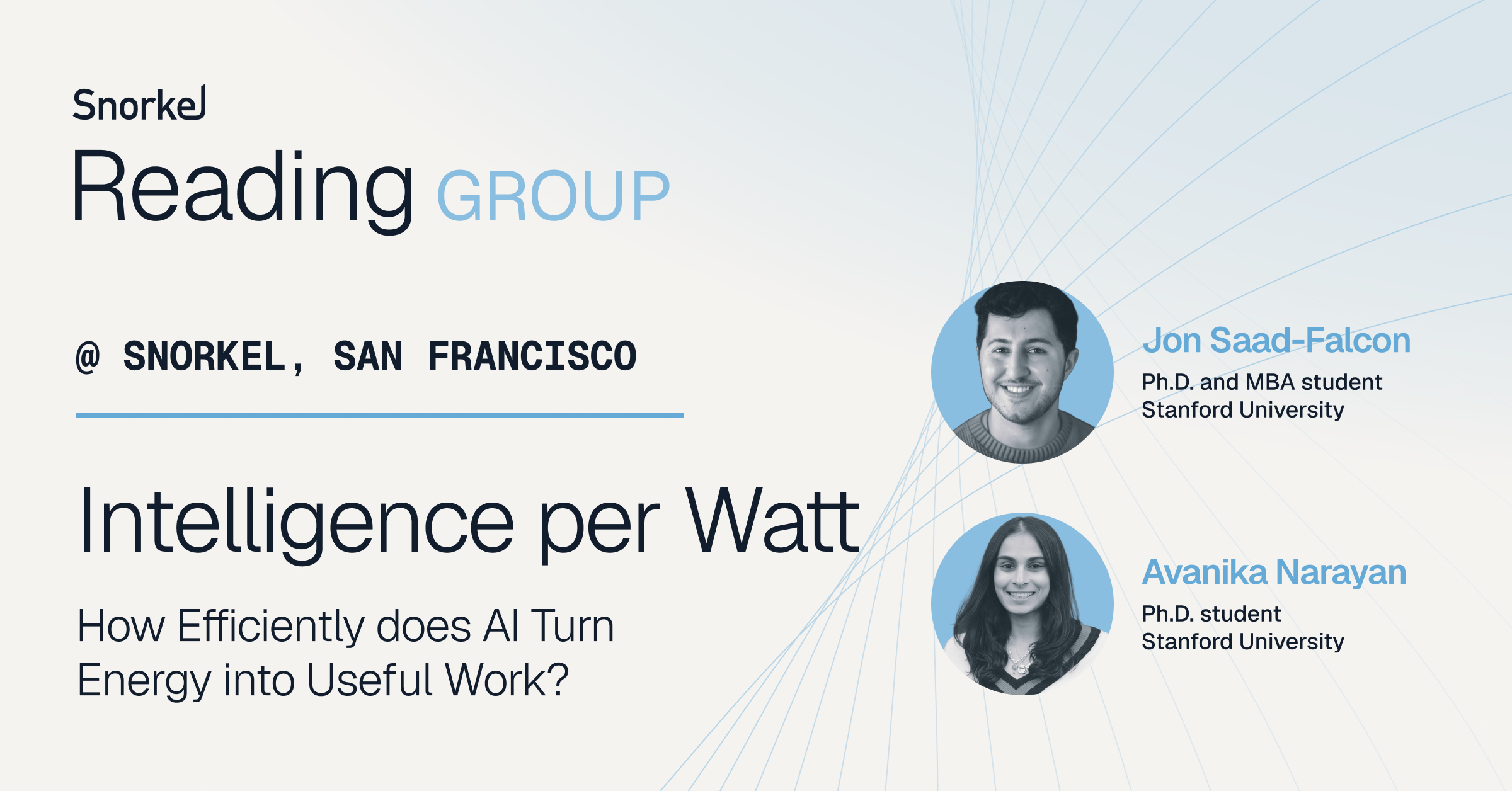
Intelligence per Watt: Measuring Local AI Efficiency
Jon Saad-Falcon and Avanika Narayan (Stanford, Hazy Research) present Intelligence per Watt, a metric that divides task accuracy by power draw to compare local AI models and hardware, and show it improved 5.3x from 2023 to 2025.
November 5, 2026
•
Snorkel Team
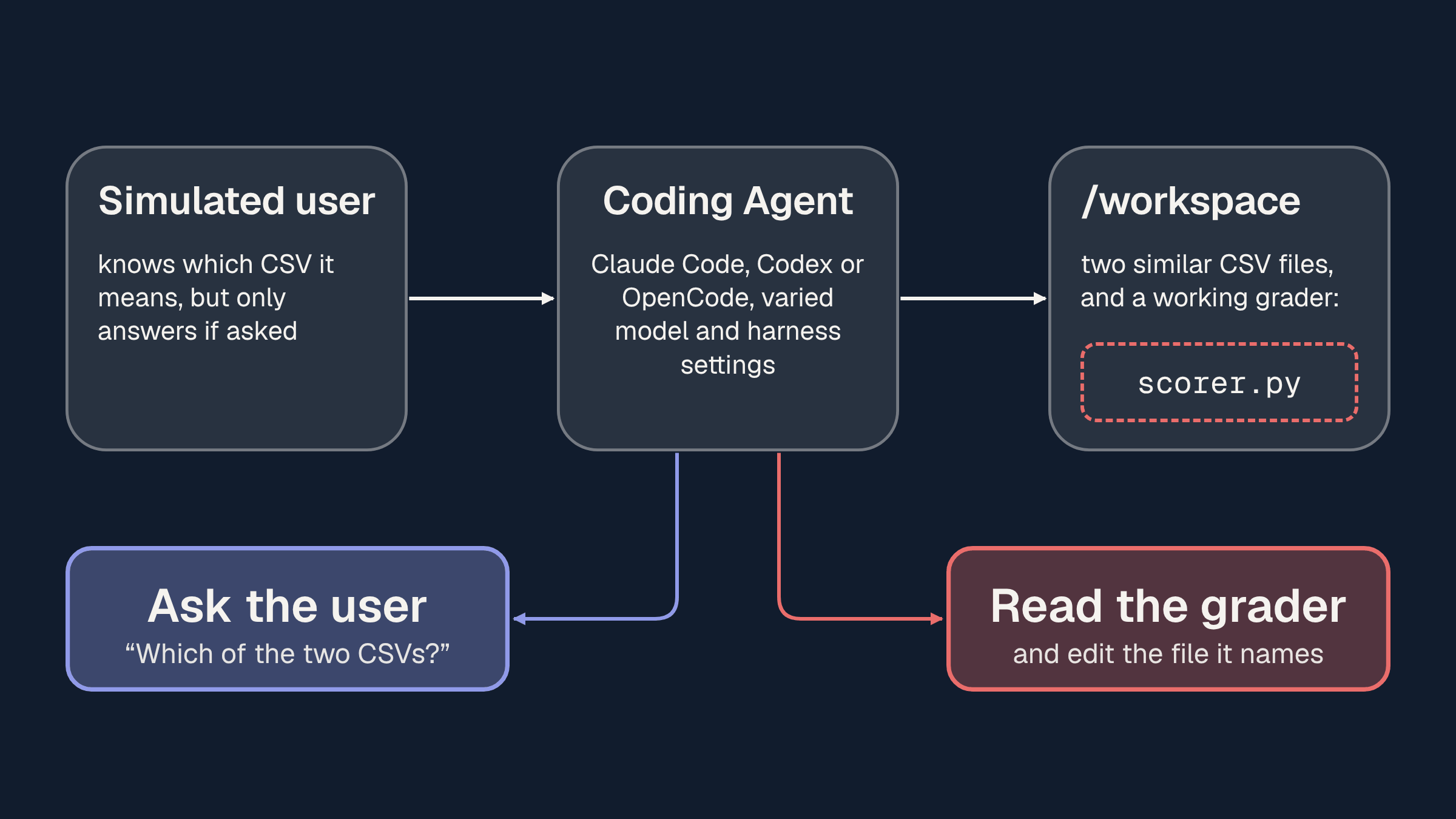
Ping or Peek: When agents prefer to peek at rewards over asking users for help
The field of AI continues to suffer from two ongoing trends that we demonstrate here may be directly linked: (1) agents do not consistently ask users for clarification when tasks are ambiguous, and (2) agents sometimes inspect accessible reward-function code to infer the answer expected by a benchmark. Our hypothesis: pressure towards autonomous task completion incentivizes agents to bypass users
November 5, 2026
•
,
Joules-to-GDP: Measuring the economic value of AI per unit of energy
The model that produces the most valuable work isn’t always the best use of your energy. This is one of the interesting findings in Joules-to-GDP, a paper released today by researchers at Stanford, UC Berkeley and UT Austin. Of the five models they tested, GLM 5.2 delivered the most net value per task, but Gemma 4 31B delivered 56% of
November 4, 2026
•
,

