

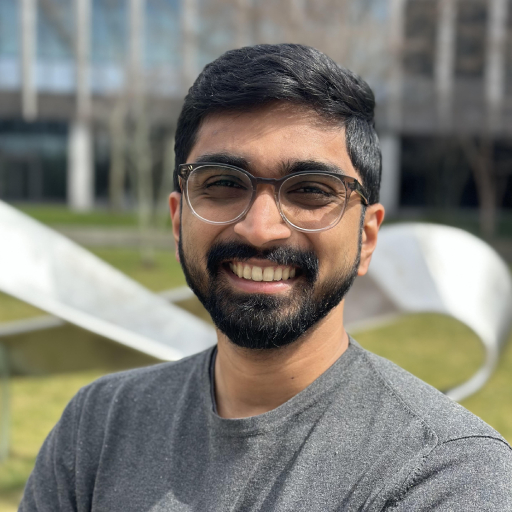
author
Ph.D. candidate
,
Brown University
Nihal V. Nayak is a fifth-year Ph.D. student in the Department of Computer Science at Brown University, where he is advised by Stephen H. Bach. His research focuses on zero-shot generalization in deep neural networks and, more broadly, on learning with limited labeled data. His work has been published in leading machine learning conferences and journals, including ICLR, TMLR, ACL Demo, EACL Findings, and MLSys.
The latest from Nihal
TAGLETS: A System for Automatic Semi-Supervised Learning with Auxiliary Data
Machine learning practitioners often have access to a spectrum of data: labeled data for the target task (which is often limited), unlabeled data, and auxiliary data, the many available labeled datasets for other tasks. We describe TAGLETS, a system built to study techniques for automatically exploiting all three types of data and creating high-quality, servable classifiers. The key components of TAGLETS are: (1) auxiliary data organized according to a knowledge graph, (2) modules encapsulating different methods for exploiting auxiliary and unlabeled data, and (3) a distillation stage in which the ensembled modules are combined into a servable model. We compare...
Research Paper
TAGLETS: A System for Automatic Semi-Supervised Learning with Auxiliary Data
Machine learning practitioners often have access to a spectrum of data: labeled data for the target task (which is often limited), unlabeled data, and auxiliary data, the many available labeled datasets for other tasks. We describe TAGLETS, a system built to study techniques for automatically exploiting all three types of data and creating high-quality, servable classifiers. The key components of…

Multitask prompted training enables zero-shot task generalization
Large language models have recently been shown to attain reasonable zero-shot generalization on a diverse set of tasks (Brown et al., 2020). It has been hypothesized that this is a consequence of implicit multitask learning in language models' pretraining (Radford et al., 2019). Can zero-shot generalization instead be directly induced by explicit multitask learning? To test this question at scale, we develop a system for easily mapping any natural language tasks into a human-readable prompted form. We convert a large set of supervised datasets, each with multiple prompts with diverse wording. These prompted datasets allow for benchmarking the ability of...
Research Paper
Multitask prompted training enables zero-shot task generalization
Large language models have recently been shown to attain reasonable zero-shot generalization on a diverse set of tasks (Brown et al., 2020). It has been hypothesized that this is a consequence of implicit multitask learning in language models’ pretraining (Radford et al., 2019). Can zero-shot generalization instead be directly induced by explicit multitask learning? To test this question at scale,…

