


Machine Learning Whiteboard (MLW) Open-source Series
Earlier this year, we started our machine learning whiteboard (MLW) series, an open-invite space to brainstorm ideas and discuss the latest papers, techniques, and workflows in the AI space. We emphasize an informal and open environment to everyone interested in learning about machine learning.In this episode, our Co-founder and Head of Technology. Braden Hancock speaks about “Training Classifiers with Natural Language Explanations,” a research paper by Braden Hancock, Paroma Varma, Stephanie Wang, Martin Bringmann, Percy Liang, and Christopher Ré presented at ACL 2018.This episode is part of the #MLwhiteboard video series hosted by the Snorkel AI team. Check out the episode here:
Abstract:
Training accurate classifiers requires many labels, but each label provides only limited information (one bit for binary classification). In this work, we propose BabbleLabble, a framework for training classifiers in which an annotator provides a natural language explanation for each labeling decision. A semantic parser converts these explanations into programmatic labeling functions that generate noisy labels for an arbitrary amount of unlabeled data, which is used to train a classifier. On three relation extraction tasks, we find that users are able to train classifiers with comparable F1 scores from 5-100× faster by providing explanations instead of just labels. Furthermore, given the inherent imperfection of labeling functions, we find that a simple rule-based semantic parser suffices.
If you are interested in learning with us, consider joining us at our biweekly ML whiteboard.If you’re interested in staying in touch with Snorkel AI, follow us on Twitter, LinkedIn, Facebook, Youtube, or Instagram, and if you’re interested in joining the Snorkel team, we’re hiring! Please apply on our careers page.

Recommended articles
View all articles
Intelligence per Watt: Measuring Local AI Efficiency
Jon Saad-Falcon and Avanika Narayan (Stanford, Hazy Research) present Intelligence per Watt, a metric that divides task accuracy by power draw to compare local AI models and hardware, and show it improved 5.3x from 2023 to 2025.
November 5, 2026
•
Snorkel Team
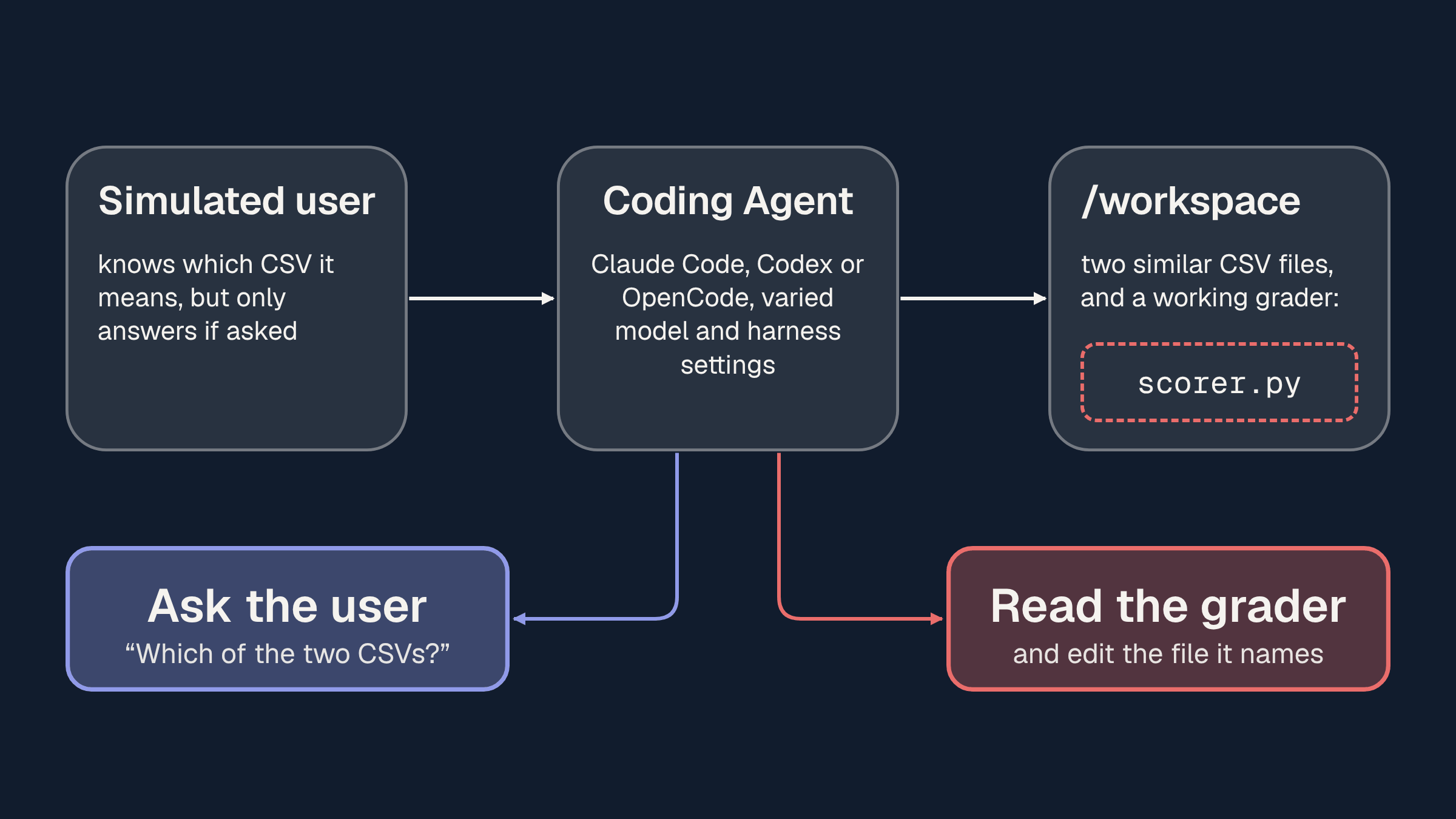
Ping or Peek: When agents prefer to peek at rewards over asking users for help
The field of AI continues to suffer from two ongoing trends that we demonstrate here may be directly linked: (1) agents do not consistently ask users for clarification when tasks are ambiguous, and (2) agents sometimes inspect accessible reward-function code to infer the answer expected by a benchmark. Our hypothesis: pressure towards autonomous task completion incentivizes agents to bypass users
November 5, 2026
•
,
Joules-to-GDP: Measuring the economic value of AI per unit of energy
The model that produces the most valuable work isn’t always the best use of your energy. This is one of the interesting findings in Joules-to-GDP, a paper released today by researchers at Stanford, UC Berkeley and UT Austin. Of the five models they tested, GLM 5.2 delivered the most net value per task, but Gemma 4 31B delivered 56% of
November 4, 2026
•
,

